Commercial Scales2026-05-15T21:21:55+00:00

Commercial Tabletop Scales

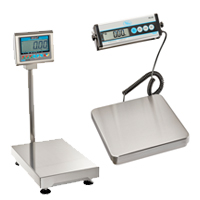
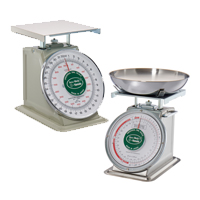
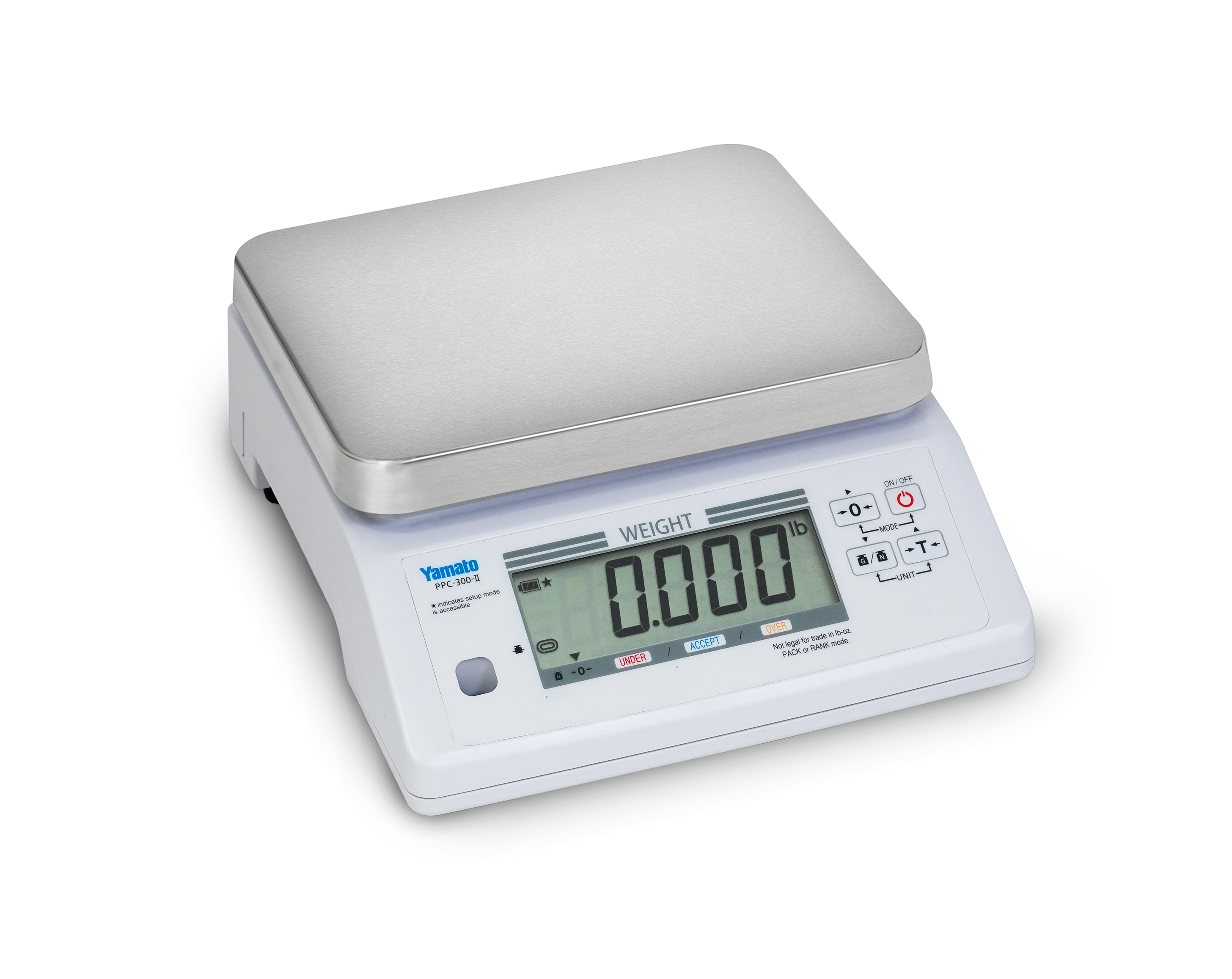
Yamato’s commercial scales are engineered for diverse industrial and commercial needs. Our comprehensive range, including mechanical, digital, and platform commercial scales, seamlessly integrates into an extremely wide variety of applications like restaurants, grocery chains, food-processing facilities, and general weighing applications. We also provide dedicated parts & service to keep your commercial weighing scales running smoothly. Discover how our commercial scales can elevate your operations. Have questions, or need more info? contact us and we will get back to you shortly.

If you are interested in becoming an official dealer of Yamato Commercial scales, please reach out.
Related FAQs

How do you read a mechanical kitchen scale?2026-04-23T17:12:32+00:00

To read a mechanical kitchen scale, first place it on a flat, level surface and check that the needle points to zero; if not, use the adjustment dial (usually under the platform) to zero it. Set your container on the scale and, if the model allows, tare to bring the needle back to zero so only the food weight is measured. Add your ingredients and look at where the needle aligns on the dial; read the value directly across from the needle on the measurement scale (grams, ounces, pounds, etc.). If using a mechanical scale, view the dial straight-on at eye level to avoid parallax error and wait for the needle to stop moving before recording the weight.

Are digital or mechanical scales more accurate?2026-04-23T17:12:01+00:00

Digital scales are generally more accurate than mechanical scales because they use electronic load cells that measure weight precisely and display exact numerical readings, reducing human interpretation error. They typically provide finer resolution, faster readings, and consistent repeatability, making them ideal for applications where precision matters, such as cooking, packaging, or laboratory work. Mechanical scales rely on springs or balance mechanisms, which can wear over time and are more prone to calibration drift or reading variability, though they are often more durable, require no batteries, and perform reliably in rugged or low-tech environments. Yamato mechanical scales feature Dashspot which enables a quicker response time and less oscillation of the weighing dial.

What are the different types of commercial scales?2026-04-23T17:11:32+00:00

There are several types of commercial scales designed for different industries, accuracy levels, and applications. Bench scales are compact units used for general weighing, portioning, and checkweighing in food processing. Floor scales handle heavy loads such as pallets and bulk materials. Platform scales provide larger weighing surfaces for oversized items. Counting scales are used to count parts by weight, common in manufacturing and inventory control.

Genuine Parts

Don’t jeopardize your weighing machine’s operating efficiency by using aftermarket parts. We have extensive parts inventories on hand in our three offices so we can deliver what you need when you need it.

Yamato Service

Extend the life of your automatic weighing scale with proper maintenance. We provide training, emergency response service, and preventative maintenance programs for all generations of our scales.

Go to Top